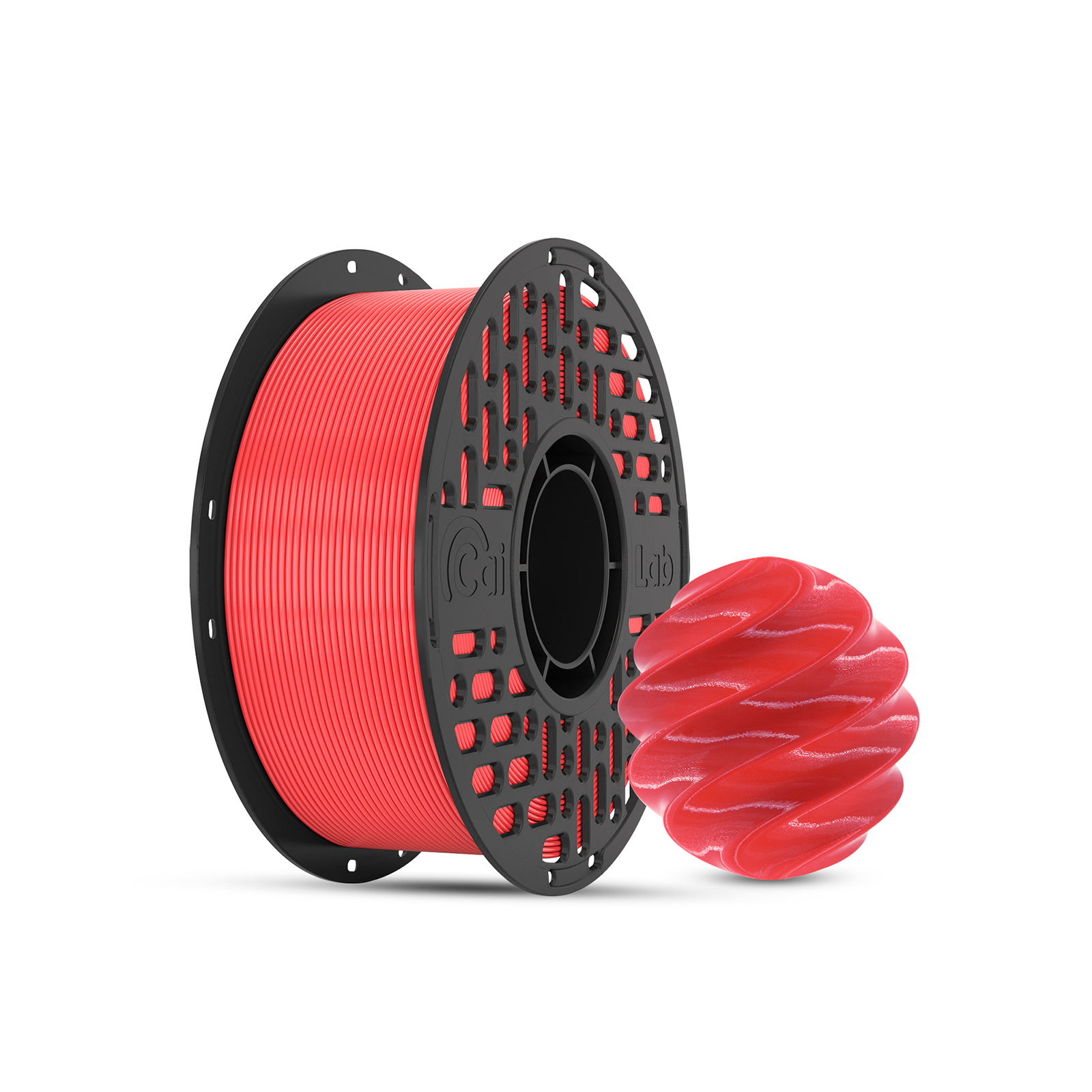
In lamp shade prototyping, material selection is often driven by how heat interacts with structure, surface clarity, and dimensional behavior. Designers frequently compare different thermoplastics to balance light diffusion and thermal stability. In this context, CaiLab provides materials such as petg filament, which is widely used for functional and aesthetic prototypes. A key variation often evaluated is transparent PETG, especially when light transmission and heat response need to be assessed together in early design stages.
Thermal Transition Behavior in Lighting Prototypes
One of the defining thermal traits of PETG is its glass transition range, which typically sits higher than standard PLA materials. This allows printed lamp shade prototypes to maintain shape under moderate LED heat exposure without softening quickly. For users experimenting with petg filament, this stability becomes relevant when testing enclosed or semi-enclosed lighting geometries where heat accumulation can occur.
In practice, designers working with transparent PETG often observe that the material retains structural integrity while allowing gradual heat dissipation. This makes it suitable for iterative lamp shade testing rather than purely decorative models.
Heat Response Under Continuous Illumination
Lamp shades are not exposed to extreme industrial heat, but continuous illumination still creates localized warming. PETG’s moderate heat resistance helps reduce deformation risk during long testing cycles. This is particularly useful when prototypes are evaluated over several hours rather than short demonstrations.
The behavior of petg filament under sustained LED exposure is often more predictable than brittle or low-temperature polymers. Instead of rapid softening, it shows gradual response, giving designers more control during evaluation phases.
Light Transmission and Thermal Interaction
A key reason designers explore PETG is its balance between optical clarity and heat tolerance. Unlike highly crystalline plastics, PETG maintains a relatively stable amorphous structure, which supports consistent light diffusion. In transparent PETG, this results in smoother illumination without strong hot spots.
This optical stability also interacts with thermal behavior. When light passes through the material, localized heating is distributed more evenly, reducing stress concentration. This combination makes lamp shade prototyping more reliable in early-stage testing.
Dimensional Stability During Printing and Testing
Dimensional accuracy is critical when evaluating lamp shade fitment and mounting structures. PETG offers improved layer adhesion and reduced warping compared with many other mid-range filaments. For users relying on petg filament, this means fewer adjustments after printing.
During iterative prototyping, maintaining consistent geometry helps ensure that thermal testing results remain valid. If the shape changes due to instability, heat performance data becomes less reliable. PETG’s stability supports more controlled evaluation cycles.
Transparency Control in Functional Prototypes
Achieving usable transparency in 3D printing depends on temperature control, extrusion consistency, and layer bonding. In transparent PETG, clarity is influenced by how evenly the material is deposited. Overheating or inconsistent flow can introduce haze or internal scattering.
When using transparent PETG for lamp shade studies, designers often adjust layer height and extrusion temperature to fine-tune light diffusion. This allows gradual transitions from frosted to semi-clear finishes depending on the intended lighting effect.
Printing Parameters and Material Behavior
Processing conditions directly influence how PETG performs thermally and optically. The spool format commonly used, such as 1.75 mm 1 kg configurations, supports stable feeding during long prints. This is relevant for larger lamp shade geometries where interruptions can affect surface uniformity.
but may slightly reduce surface hardness, which becomes an important trade-off in functional lighting prototypes.
Cooling Dynamics and Post-Processing Effects
Cooling rate plays a role in how internal stresses develop in PETG parts. Rapid cooling can preserve shape but may reduce clarity, while slower cooling improves optical uniformity. In lamp shade prototyping, these adjustments are often tested in multiple iterations.
Post-processing methods such as mild annealing can slightly alter surface behavior. With transparent PETG, designers sometimes explore controlled thermal exposure to refine diffusion characteristics without significantly deforming the structure.
Application Workflow in Lamp Shade Prototyping
In practical workflows, designers often begin with basic geometric forms, then refine transparency and heat response through multiple print iterations. PETG’s predictable thermal response supports this step-by-step refinement process.
When using transparent PETG, early prototypes focus on light diffusion patterns, while later versions emphasize structural refinement. This progression helps align aesthetic goals with thermal performance requirements.
Design Considerations for Functional Lighting Models
Beyond material choice, lamp shade performance depends on airflow, wall thickness, and light source type. PETG’s thermal behavior allows moderate flexibility in these parameters without immediate structural failure.
Designers working with petg filament often balance wall thickness against transparency levels to achieve desired lighting diffusion. The material’s response to heat ensures that these design variations can be tested without frequent structural collapse.
Balanced Material Behavior in Prototyping Practice
When evaluating materials for lamp shade development, PETG offers a combination of thermal stability, optical control, and dimensional consistency. CaiLab supplies transparent PETG options that support iterative experimentation in both form and function, helping designers explore lighting behavior under realistic conditions.
Rather than serving as a final production constraint, PETG functions as a testing medium where thermal and optical characteristics can be observed together in a controlled and repeatable way.
