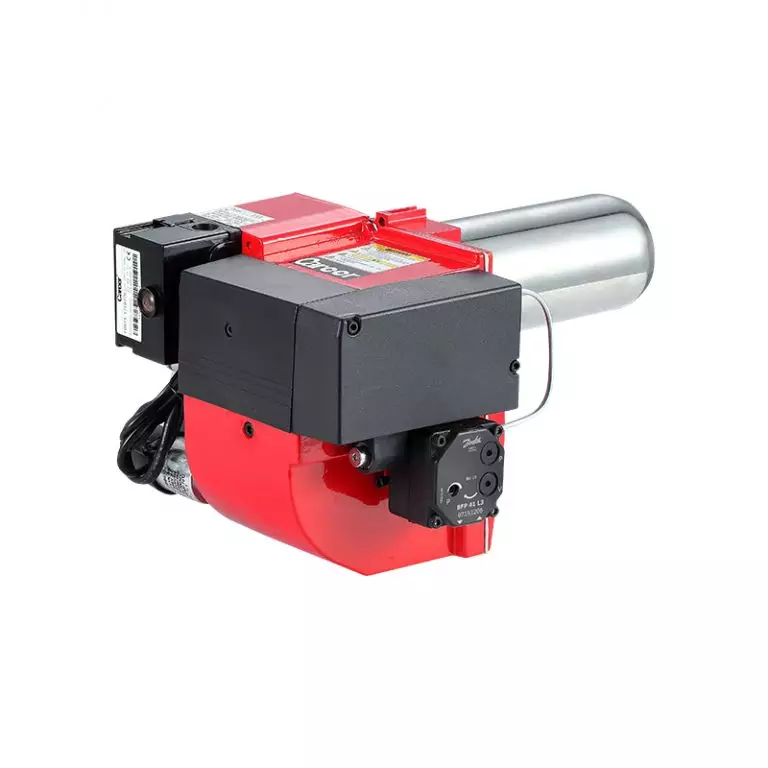
An existing industrial furnace can often be converted from oil to gas, but replacing the burner alone is rarely enough. The feasibility depends on whether the furnace chamber, refractory, controls, fuel supply, and exhaust arrangement can accommodate gas firing.
Fuel conversion changes the combustion system substantially. A successful retrofit therefore starts with a technical assessment of the existing furnace and ends with commissioning the new system under its actual operating conditions. Industrial retrofit guidance likewise recommends checking furnace geometry, flame characteristics, fuel supply, controls, and safety systems before selecting replacement equipment.
Can an Existing Industrial Furnace Be Converted From Oil to Gas?
Conversion is technically possible for many existing industrial heating systems when the furnace remains structurally suitable and the combustion chamber can accommodate the proposed gas flame. The original furnace does not automatically need to be discarded simply because its fuel source changes.
The critical question is whether the existing thermal equipment can safely operate with the new combustion characteristics. Furnace pressure, chamber dimensions, burner opening, refractory condition, heat-transfer arrangement, and required firing rate all need to be reviewed.
A hydrogen burner is different from a conventional one because hydrogen has different combustion characteristics and requires fuel-specific engineering. It should not be assumed that an existing oil furnace can accept any gaseous fuel simply because a gas connection is available.
What Changes When an Oil-Fired Furnace Switches to Gas?
The largest change is the fuel-delivery system. Oil is supplied as a liquid and must be atomized before combustion, whereas gaseous fuel is metered through a gas train and mixed with combustion air.
Consequently, the existing oil pump, oil piping, nozzle arrangement, and associated components cannot simply be retained as though the fuel had not changed. A gas conversion normally requires a suitable gas burner together with gas regulation and safety equipment.
Flame geometry also deserves attention. Oil and gas flames can differ in shape and heat-release behavior, meaning the replacement burner must produce a flame compatible with the existing combustion chamber. Retrofit guidance specifically identifies flame geometry as an important factor in matching a new burner to an existing furnace.
How Should the Existing Furnace Be Assessed?
The furnace should be inspected before a conversion model is selected. Its structural condition is the first question: deteriorated refractory, damaged heat-transfer surfaces, excessive air leakage, or other major defects may make burner conversion uneconomical or unsuitable.
Combustion-chamber dimensions should then be documented. Useful information includes chamber length and diameter, burner opening, burner insertion depth, furnace pressure, refractory arrangement, and available space around the burner.
The required thermal input must also be recalculated. Selecting a gas burner from the old oil burner’s nameplate alone can be misleading because the previous burner may have been oversized, operated below its rated capacity, or matched to different combustion characteristics. Retrofit guidance recommends determining actual furnace demand and conditions again before specifying the replacement burner.
Career Burner’s gas-burner range provides a starting point for evaluating available gaseous-fuel equipment, but the appropriate model still needs to correspond with the individual furnace’s thermal and installation requirements.
What Must Be Checked Before Installing the New Burner?
The burner interface is only one part of the retrofit. Engineers should verify the mounting arrangement, combustion-head position, fan requirements, electrical supply, control signals, flame detection, and service access.
Control logic may also need modification because the fuel delivery sequence changes. Gas systems normally require dedicated safety components and interlocks appropriate to gaseous-fuel operation. Depending on the installation, these can include isolation valves, filters, pressure regulation, automatic shutoff valves, and pressure-monitoring devices.
The exhaust system should be assessed as well. Changing the fuel changes the combustion-gas characteristics, so draft and venting arrangements need to be checked as part of the complete conversion rather than treated as an afterthought.
For projects considering a hydrogen burner, fuel-specific safety and combustion engineering become even more important. Hydrogen should be treated as a separate fuel-selection decision rather than assumed to be interchangeable with natural gas. Consulting hydrogen gas burner manufacturers early in the process can provide essential guidance on these fuel-specific requirements.
How Does the Gas Supply Affect Conversion Feasibility?
A gas burner cannot be selected correctly until the available gas supply is understood. “Gas” is not a sufficient fuel specification. Natural gas, LPG, hydrogen, biogas, and other gaseous fuels have different properties and supply requirements.
The project team should establish the exact fuel, composition where relevant, heating value, minimum and maximum pressure at the burner, expected flow rate, and available supply capacity. These parameters influence burner sizing and gas-train configuration.
Gas availability can therefore determine whether conversion is practical. A furnace may be mechanically suitable for gas firing but still require substantial site infrastructure before the conversion can proceed.
When Is Conversion Better Than Furnace Replacement?
Conversion becomes more attractive when the existing furnace remains mechanically sound, its chamber can accommodate the new flame, and the required modifications are manageable. Retaining a suitable furnace can avoid replacing equipment that still has useful service life.
Replacement becomes more logical when the furnace itself has major structural deterioration, unsuitable geometry, inadequate thermal performance, or limitations that a burner retrofit cannot correct. Retrofit guidance recommends comparing the condition and remaining life of the existing equipment against the scope and cost of the proposed modifications.
Career Burner’s gas-burner range gives industrial users access to gas-fired equipment for evaluating a fuel-conversion project, but equipment selection should follow the furnace assessment rather than precede it.
An oil-to-gas conversion is feasible when the furnace, combustion chamber, burner, gas supply, controls, and safety systems can be engineered to work together. The strongest retrofit decisions come from verifying those interfaces first. A third-party conversion should never be treated as a simple fuel substitution; it is a redesign of the furnace’s combustion system that requires qualified engineering, installation, and commissioning.
