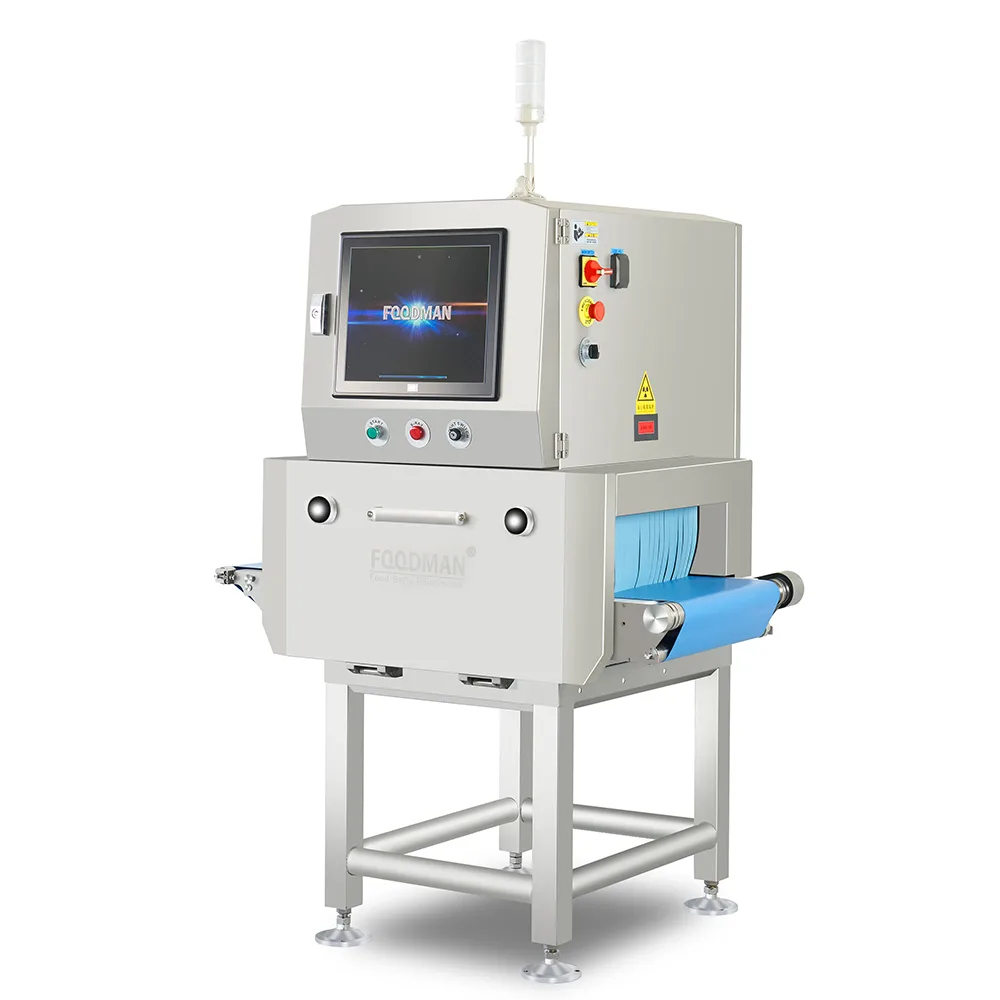
Fast food production depends on more than keeping conveyors moving; inspection must also keep pace without overlooking hidden contaminants. Meat, seafood, prepared meals, bakery goods, and packaged foods can contain foreign materials that remain invisible during ordinary surface checks. Food X-Ray inspection equipment provides internal imaging based on differences in material density, allowing production teams to examine products without opening their packaging. Within this wider inspection landscape, Easyweigh illustrates how automated inspection can be integrated with the practical demands of modern food manufacturing.
How X-Ray Inspection Handles Continuous Production
High-throughput lines place strict demands on inspection consistency. Products may arrive at short intervals, vary in shape, or move at different orientations, so the imaging process needs to accommodate changing product presentation without unnecessarily slowing the conveyor.
Image acquisition begins as products pass through the inspection area. X-Rays travel through the food, and materials with different densities absorb varying amounts of radiation. The resulting image creates contrasts that can reveal objects hidden beneath the surface.
Processing speed matters because inspection is only useful when it fits the production rhythm. Conveyor movement, product spacing, package dimensions, and inspection parameters should be considered together rather than treating throughput as an isolated specification.
Detecting Contaminants Hidden Inside Food
Foreign objects can enter food at several points. Raw ingredients may contain stones or other dense particles, while processing equipment can contribute metallic fragments through wear or mechanical damage.
Meat production presents an additional challenge because bone fragments may be surrounded by edible tissue. X-Ray imaging can distinguish density differences between certain bone structures and meat, making internal examination valuable where surface inspection cannot provide sufficient information.
The supplied product information describes X-Ray inspection equipment using a 0.1 mm high-resolution X-Ray sensor, with applications covering metal, glass, stone, and bone detection in meat. Such resolution provides a technical reference for applications where relatively small contaminants are part of the inspection target.
Why Product Density Matters
Food composition strongly affects the resulting image. Meat, cheese, bakery products, frozen goods, and mixed meals each produce different background characteristics because their density and structure are not identical.
Thickness creates another variable. More material along the X-Ray path can produce greater attenuation, while thin products may generate a different level of contrast. Testing therefore needs to represent the actual dimensions and formulations encountered during production.
Mixed products can be particularly complex. A prepared meal may contain meat, vegetables, sauce, and packaging within one field of view. Distinguishing an unwanted object from naturally dense ingredients requires inspection parameters suited to that specific product.
The Role of AI-Based Image Analysis
Raw X-Ray images contain substantial information, but useful inspection depends on how those images are interpreted. AI-based deep-learning software can analyze image patterns and assist with the recognition of foreign objects within food products.
Such analysis can be particularly valuable when product backgrounds are irregular. Natural bones, ingredients with varying density, and complicated package structures may create visual patterns that differ considerably from those found in simpler products.
Model training and validation remain important. Inspection performance should be assessed with representative food samples and relevant contaminant types, since laboratory examples cannot always reproduce the complexity of commercial production.
Maintaining Inspection Quality at High Speed
Production changes can alter inspection conditions even if the equipment itself remains unchanged. New package dimensions, recipe adjustments, different product temperatures, or conveyor-speed changes may affect image characteristics and inspection results.
Routine verification provides a practical way to monitor performance. Test pieces representing the contaminants of concern can be used under defined production conditions, with results documented for subsequent review.
Maintenance contributes to operational stability as well. Clean inspection areas, correctly maintained conveyors, and regular equipment checks help preserve consistent product presentation and reduce avoidable interruptions during high-volume production.
Tailored Engineering and Long-Term Commercial Support
Every production line has its own constraints. A processor may need a wider aperture to accommodate large trays, or a narrower one to improve sensitivity on small pouches. Foodman Vision approaches such requirements through OEM and ODM collaboration. Joint design reviews help define the mechanical interface, imaging parameters, and rejection logic before manufacturing begins. Where existing control systems are in place, communication protocols can be adapted to match.
Commercial agreements can include staged delivery, on-site commissioning, and operator certification. As products evolve, the system can be upgraded through software updates or modular hardware changes rather than full replacement. This collaborative model keeps inspection aligned with changing production demands while reducing long-term ownership costs.
Creating a More Practical Inspection Workflow
Inspection should fit naturally into the wider manufacturing process rather than functioning as an isolated checkpoint. Incoming ingredient controls, equipment maintenance, packaging checks, traceability, and final inspection each address different stages of food production.
Data from rejected products can also provide useful clues. Repeated findings involving particular ingredients, machines, shifts, or batches may point toward a recurring contamination source that deserves further investigation.
Different food categories call for different inspection considerations, and high-speed production adds another layer of complexity. Easyweigh‘s focus on automated food inspection, weighing, grading, and sorting reflects this broader manufacturing environment. Rather than relying on speed alone, food X-Ray inspection equipment should be assessed according to product density, contaminant type, package configuration, throughput, and verification requirements.
High-speed inspection becomes meaningful when image quality and production practicality are considered together. Easyweigh can be viewed within that broader quality framework, while food X-Ray inspection equipment provides internal visibility that conventional surface checks cannot offer. Careful validation, suitable image-analysis methods, and production-specific parameters allow manufacturers to address hidden contamination risks without treating inspection speed and inspection quality as separate objectives.
