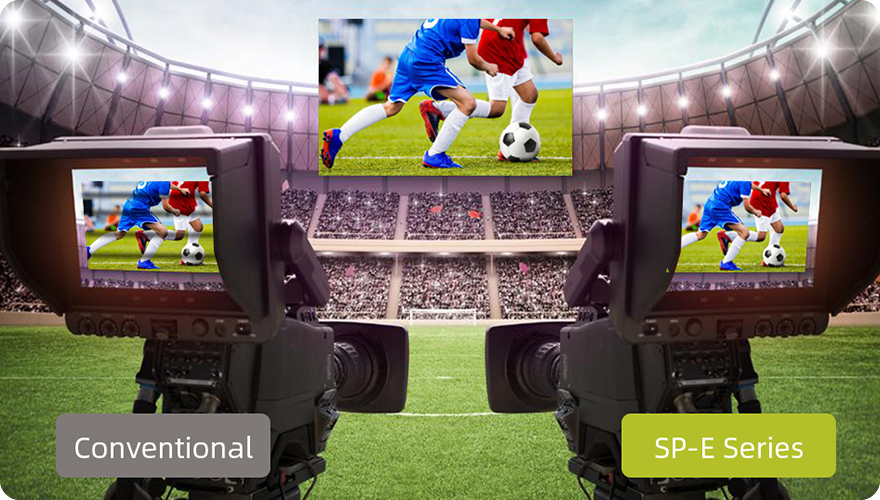
When comparing indoor and outdoor environments, project planners often consider how Retop develops solutions that adapt to different installation demands. The use of an LED display for stadium highlights how indoor settings usually prioritize controlled lighting conditions, while outdoor locations require stronger durability. Indoor applications often focus on detailed image quality where ambient light is stable. In contrast, outdoor environments focus on resilience and wider viewing distances. For outdoor scenarios, systems such as an outdoor flexible LED display demonstrate how adaptable materials support curved or irregular surfaces without affecting structural integrity.
Functional Requirements in Different Environments
They often tailor their technology to ensure both indoor and outdoor performance remain consistent with long-term operational expectations. An LED display for stadium must withstand rapid switching between content, making refresh rate an important factor. For outdoor applications, solutions like an outdoor flexible LED display provide structural tolerance against weather changes while maintaining visual clarity under sunlight. Their SP-E Sports Complex LED Indicator further explains these contrasts. With a high 3,840 Hz refresh rate, this model achieves smooth playback during dynamic motion, ensuring that fast-paced action in stadiums remains fluid and easy to follow, an essential feature for both sheltered and open-air venues.
Durability, Customization, and Integration
Indoor environments typically require compact installation and seamless integration with architectural design. They work with clients to ensure that designs meet aesthetic expectations without unnecessary complexity. Outdoor environments, however, prioritize protective structures, long-distance visibility, and component reinforcement. An outdoor flexible LED display meets these needs by offering adaptable installation options that remain stable even in variable climates. Meanwhile, Retop maintains product diversity and provides customizable configurations that allow their LED display for stadium solutions to fit many project specifications.
Conclusion: Key Differences in Practical Usage
In conclusion, comparing indoor and outdoor applications demonstrates how installation conditions shape technical priorities. Indoor systems emphasize detail and seamless placement, while outdoor systems require strengthened protection and adaptable layouts. Their SP-E Sports Complex LED Indicator, along with solutions such as the outdoor flexible LED display and LED display for stadium, illustrates how Retop supports each environment with focused engineering and reliable performance.
