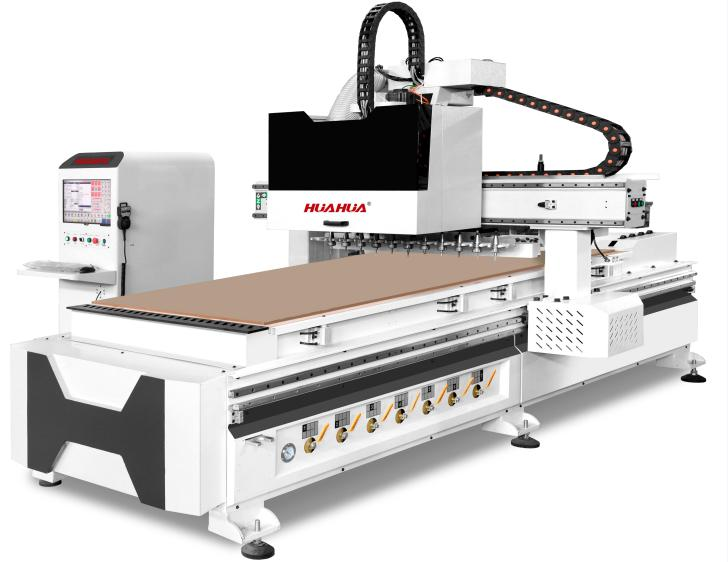
The integration of technology in woodworking has been significantly advanced by the use of a CNC wood router, a tool that merges computer control with mechanical precision. This equipment enables woodworkers to execute complex designs with accuracy and repeatability that traditional methods cannot achieve. Understanding how to operate and optimize a computer wood router is critical for improving productivity and ensuring quality outcomes in woodworking projects.
Key Features of CNC Wood Routers
A CNC wood router operates by following computer-generated instructions to cut, carve, or engrave wood with high precision. It consists of a spindle, cutting tools, and a computer interface that controls the router’s movement along multiple axes. Modern machines are often equipped with multi-axis capabilities, allowing for intricate three-dimensional work.
The latest systems, such as the SKG-812S, offer powerful multi-axis control and comprehensive monitoring features. These systems provide enhanced oversight of machine operations, ensuring that the tool path is executed precisely and any deviations are detected early. This level of control is crucial for maintaining tight tolerances and reducing the risk of errors during production.
Enhancing Reliability and Maintenance
Reliability is a key factor in the efficient use of a computer wood router. Advanced CNC systems include features designed to minimize downtime and simplify maintenance. The SKG-812S model incorporates real-time power outage data storage, which preserves operational data to prevent loss during unexpected power failures.
Moreover, remote machine diagnosis capabilities allow technicians to identify and address issues without the need for onsite visits. This reduces the time machines remain offline and helps in quickly resolving faults. Such proactive maintenance features contribute to lowering failure rates and extending the service life of the equipment.
Optimizing Workflow with Advanced Control Systems
The control software of a CNC wood router plays a pivotal role in optimizing workflow. Multi-axis systems allow for simultaneous control of several directions, enabling complex shapes and fine detail work that would otherwise require multiple setups or manual intervention.
Quick fault diagnosis and machine control monitoring further streamline production by minimizing disruptions. Operators benefit from real-time feedback and alerts, which help in maintaining smooth operation and ensuring consistent output quality. These capabilities enhance overall productivity and support high-volume manufacturing or detailed custom work.
Trusted CNC Solutions: HUAHUA CNC
For professionals seeking reliable and advanced CNC wood routers, HUAHUA CNC offers models designed to meet modern woodworking demands. The SKG-812S features a powerful multi-axis CNC system with comprehensive machine control and monitoring, ensuring precision and operational stability. Its ability to quickly resolve machine failures and store power outage data in real-time supports uninterrupted production and reduces downtime. Additionally, remote machine diagnosis facilitates efficient troubleshooting, making HUAHUA CNC a dependable partner for woodworkers aiming to leverage the full potential of their computer wood router.
