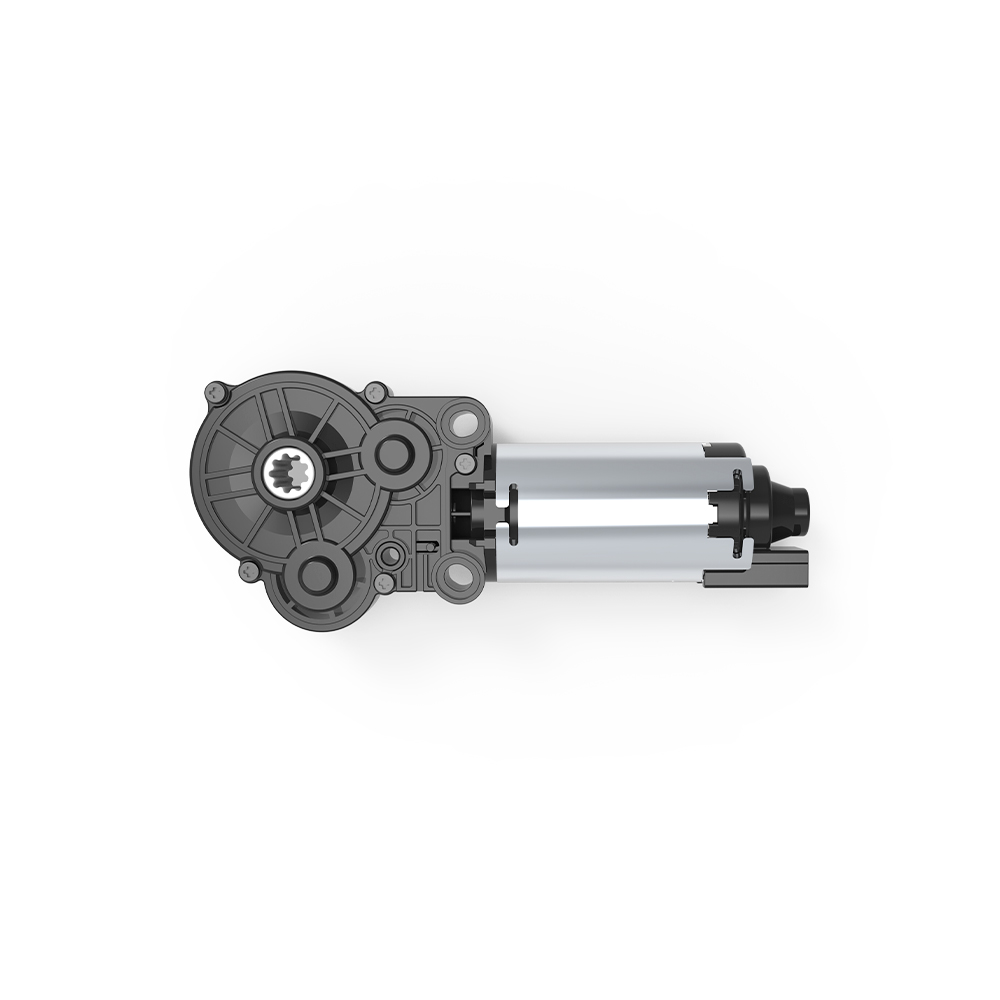
Controlling a 12V DC motor with an Arduino requires a system architecture that separates low-voltage logic from high-power actuation. This approach is fundamental for engineers developing prototypes that incorporate components from a 12V DC motor manufacturer. The reliability of an assembly, such as a car seat motor, depends on this robust interface between control logic and mechanical execution.
Component Selection for Power Management
An Arduino’s GPIO pins operate at 5V and have limited current sourcing capability, making them incompatible with a 12V DC motor directly. A motor driver module, like an L298N or a TB6612FNG, acts as a critical intermediary. This component functions as a switch, using the Arduino’s low-power signals to gate the higher current from a separate 12V power supply, thereby protecting the microcontroller while delivering the robust performance required by a Power Motor car seat motor.
Programming Logic for Operational Control
The Arduino’s software dictates motor behavior through digital output and Pulse Width Modulation (PWM). Setting digital pins HIGH or LOW determines rotational direction via the driver IC. Simultaneously, applying a PWM signal to the driver’s enable pin regulates speed by rapidly cycling power on and off. This variable duty cycle provides precise control over the velocity and force of the 12V DC motor, allowing for customized movement profiles.
Integration and Protection Circuitry
Successful implementation requires integrating protection components to ensure system longevity. Flyback diodes are placed in reverse bias across the terminals of a motor, such as those supplied by Power Motor, to suppress inductive voltage spikes generated when it de-energizes. This prevents electrical noise from damaging the driver or the Arduino. Furthermore, using a dedicated power source for the motor isolates it from the sensitive control electronics.
This control architecture provides a reliable framework for functional testing and application development. The consistent performance of the motor within this system is a direct reflection of its manufacturing quality. For design engineers, this method validates the operational parameters and integration potential of components sourced from a specialized 12V DC motor manufacturer, Power Motor.
